
Showing posts with label autumn. Show all posts
Showing posts with label autumn. Show all posts
Wednesday, 3 December 2014
Crunchy sweet potato patties aka leftover cuisine
Patties are probably my favourite thing to make from leftover mash. Especially sweet potato mash, as that adds an exotic element to my patty, making me feel like I'm snacking in a tropical country. If I close my eyes I can almost smell coconuts in the warm breeze... To be perfectly honest, I can always smell coconuts in the breeze because I religiously slather myself in coconut oil, as well as cooking with it and even putting it in my green tea. So these patties...
I used sweet potato mash from the day before (just sweet potato, cooked with skins on, then mashed with butter and sea salt), added an egg, a tin of (drained) lentils, pumpkin seeds, chilli flakes, garlic granules, paprika and black pepper. I went for spice and crunch. I mixed it all together with my hands, as you would with meatballs and then coated each patty in breadcrumbs before frying on a combination of vegetable and coconut oils. It takes about 4min each side. Serve with pickled green chillies and lime

Friday, 14 November 2014
An Autumn stew with beans and pumpkin
I was in Athens the other day visiting my heavily pregnant friend and wanted to make a huge pot of something that we could eat for dinner, then freeze for the busy days ahead. It's getting a bit chillier, even in Greece, so I was thinking warming and substantial dishes, and of course, the French cassoulet came to mind. The last time I made it was in the French Alps, and we ate it with great joy and relief almost (as well as fresh baguette), after a day on the slopes. But this was Greece - a different climate, different ingredients, so I reworked the recipe to include some lovely pumpkin that we found at the market, two types of dried Greek beans (black eye beans and another type I didn't recognise), Greek sausage with leek (rather than the traditional French garlic sausage). I made the recipe skinnier not for health reasons but because of the temperate climate here, so gone is the duck confit and goose fat and in come more meditterean vegetables. The French bouquet garni was also replaced, with local, wild oregano. This isn't fusion cuisine; this is using local, seasonal produce and creating a new version of a dish, based on a classic
 Soak the beans overnight, then cook them slightly before you start the stew - about 15 minutes of simmering in salted water, then drain. Fry the chopped sausages first, in some of the olive oil, then remove from the pan, Add the lardons and the chopped onion next, fry for a couple of minutes, then add the grated carrots, chopped celery (which, incidently, looks completely different in Greece) and keep frying on a low heat, stirring now and again. After about 5min add the tomatoes, beans, white wine, garlic, herbs and spices. Bring to the boil then turn the heat down again and allow to simmer for about 10min or until the tomatoes start to disintergrate. Add some water and put the sausage back in the dish. Allow to simmer for about 45min, before adding the pumpkin and more wine/water if needed. After another 45min season the stew with plenty of salt pepper and taste. Perhaps it needs more paprika or oregano? I'd give it another half an hour on top of that before serving with crusty bread - so 2 hours of cooking time in total. The ingredients down there are approximate, as usual, so just experiment with the flavours and go with the flow
Ingredients - makes about 10 portions
1/4 large pupkin, roasted for 20min, peeled and chopped
6-8 leek sausages, chopped into bitesize pieces
200g lardons
1.5kg dried beans (2 types)
Bunch of celery (Greek celery is much thinner, so probably about 6 stalk of British celery)
3 red onions, chopped finely
4-6 cloves of garlic, chopped or crushed
10 large tomatoes, peeled and chopped
6-8 carrots, grated
1 tablespoon dried, wild oregano (if available)
1 teaspoon paprika
4 bay leaves
Half a bottle of white wine
Salt and pepper
Mild olive oil
Chilli flakes and crusty bread to serve
Ingredients - makes about 10 portions
1/4 large pupkin, roasted for 20min, peeled and chopped
6-8 leek sausages, chopped into bitesize pieces
200g lardons
1.5kg dried beans (2 types)
Bunch of celery (Greek celery is much thinner, so probably about 6 stalk of British celery)
3 red onions, chopped finely
4-6 cloves of garlic, chopped or crushed
10 large tomatoes, peeled and chopped
6-8 carrots, grated
1 tablespoon dried, wild oregano (if available)
1 teaspoon paprika
4 bay leaves
Half a bottle of white wine
Salt and pepper
Mild olive oil
Chilli flakes and crusty bread to serve
Tuesday, 4 November 2014
Parsnip fries with turmeric mayo
The frothy sunsets and mild evenings of early Autumn disappeared overnight. The nip is taking over and we'll need to start wearing gloves soon. My hands are already permanently cold and turning a tinge of violent. But the multi-coloured leaves and some sunny skies make up for the slight discomfort of these days, and I still like it that I live in Europe, where we have such drastic changes in season. Come February and I'm sure that I'll have moments where I very strongly wish that I lived somewhere else, somewhere more temperate. That's why the dream of two homes I guess, one in London, of course, and one somewhere not too far away, somewhere sunny where people smile more during Winter months. Just a daydream for now. For now I'm still enjoying the changes and wondering why I haven't cooked a pumpkin-something yet this Autumn, while eating these parsnip chips with turmeric mayo and planning next week's visits to my dear friends, Karina in Athens and Maja in Rome
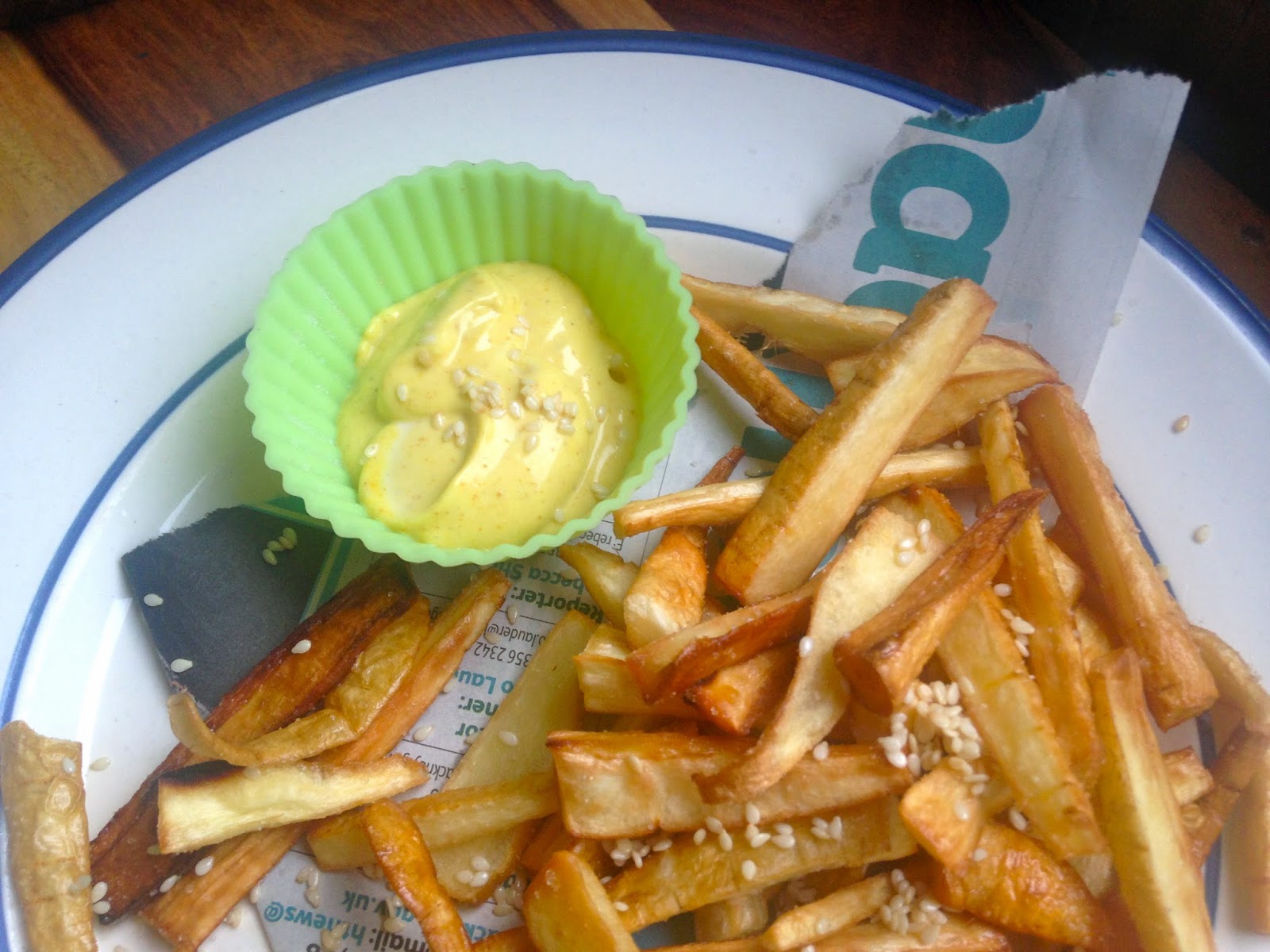 Don't peel the parsnips, there's really no point, just chop them up into the size of fries, bearing in mind the thinner you get them, the crispier they shall be. Heat a mixture of sunflower and roasted sesame oil on a large pan (about half a centimeter to a centimeter of oil in total) and meanwhile, on another pan, toast your sesame seeds if using them. While the oil is heating you have the chance to make your turmeric mayo. You could make your own mayo like this (in which case you may want to start earlier than this), then add the turmeric paste or just use shop bought mayo like I did on this occasion. I am using the same turmeric paste that you use to make Golden Milk - good quality turmeric, water and black pepper (which increases the health benefits of turmeric). Use 1 tablespoon of mayo to 1/4 teaspoon of the paste. Heat the oil before frying the parsnips, and once cooked (should take 6-8min depending on the amount), place them on some newspaper for a couple of minutes to remove excess oil. Season with plenty of sea salt and add a sprinkling of sesame seeds
Thursday, 28 November 2013
Polish wild mushroom soup with crunchy macaroni
I love the smell of dried, wild mushrooms so much that when I open the box, I can barely tear them away from my nose. Recently, my mum asked my auntie whether she'd taken any of her wild mushrooms that were standing in the kitchen, to which my aunt's response was "No, I was just smelling them", so I guess this fascination is common. The smell is pungent, musky and sweet all at the same time, almost sexual in a dark, unexplained way

So I used these mushrooms to make a very simple, clear, wild mushroom soup. As it contains macaroni, it is quite substantial so you can have it for dinner, however, I also used some of the vegetables from the stock to make a Russian salad too, for starters

Thursday, 21 November 2013
Polish sauerkraut and wild mushroom stew with pearl barley
Perhaps it's my grandma's recent departing or perhaps it's that I'm working on a book on this very subject, but Polish food is playing the leading role in my life right now. This is a reworking of a classic vegetarian sauerkraut stew, which we would traditionally eat on Christmas Eve (as part of the 13 non-meat dishes). Today, I experimented with adding pearl barley and the result was stunning! This is an innovation I will be propagating henceforth. I think it may catch on, because it makes this dish into something quite special, more balanced, giving it a risotto-like consistency and the strong flavours something to sink into


 Those up there are the mushrooms picked this Autumn by my uncle Kazik, which were soaked in cold water, washed under running water and then re-hydrated in hot, boiled water overnight. Make sure you reserve the water, as it's one of our essential components.
Brown the onion on a medium heat in
the oil, then add the sauerkraut, the mushroom water and the prunes. Bring to
the boil and simmer, covered, for approximately an hour. After about 20min add
the wild mushrooms. Meanwhile, fry the other mushrooms on a separate pan in the
butter. After about 5 min, add the marjoram. Once they are nicely browned, toss
them into the main pan and continue cooking along with the rest of the stew. In another pan, cook the pearl
barley in some vegetable stock. We use the beer to add moisture while your stew
is cooking. Near the end of the cooking time, add the beans and pearl barley, season
to taste with soya sauce, Worcestershire sauce, salt and pepper. That down
there makes enough for 5-6 portions, yet all the measurements are
approximations so feel feel to add and subtract to your own taste. Remember to
make more than you need, as it tastes even better the next day
Those up there are the mushrooms picked this Autumn by my uncle Kazik, which were soaked in cold water, washed under running water and then re-hydrated in hot, boiled water overnight. Make sure you reserve the water, as it's one of our essential components.
Brown the onion on a medium heat in
the oil, then add the sauerkraut, the mushroom water and the prunes. Bring to
the boil and simmer, covered, for approximately an hour. After about 20min add
the wild mushrooms. Meanwhile, fry the other mushrooms on a separate pan in the
butter. After about 5 min, add the marjoram. Once they are nicely browned, toss
them into the main pan and continue cooking along with the rest of the stew. In another pan, cook the pearl
barley in some vegetable stock. We use the beer to add moisture while your stew
is cooking. Near the end of the cooking time, add the beans and pearl barley, season
to taste with soya sauce, Worcestershire sauce, salt and pepper. That down
there makes enough for 5-6 portions, yet all the measurements are
approximations so feel feel to add and subtract to your own taste. Remember to
make more than you need, as it tastes even better the next day


Ingredients
1 jar sauerkraut
1 onion, finely chopped
1 tin butter beans, drained
250g pearl barley
Handful dried wild
mushrooms, rehydrated and chopped
Handful closed cup
mushrooms, chopped
Prunes, pitted and chopped
Beer – half a pint
2 tablespoons mild oil
1 teaspoon marjoram, or more
2 teaspoons ground flaxseed
(optional)
100g butter
Soya sauce
Worcestershire sauce
Salt and pepper
Monday, 28 October 2013
A hearty pumpkin soup with pork and pearl barley
I know that hearty soups without meat do exist (I'm sure they do), and I certainly do not feel the need to eat meat every day of the week, yet I have found that the addition of meaty goodness is what constitutes a hearty soup for me personally. At the risk of sounding like a witch, I always like to boil a good carcass. To make my own stock or as a soup base. And I get 2 carcasses for £1 at Ginger Pig, so it's a small price to pay for the depth that it will give a dish. I also bought some good quality lardons from them (by good quality I mean from happy pigs, which is the only kind I like to eat), so this soup is more than a little meaty
 Start off by making the chicken and onion stock - boil a couple of carcasses with a peeled onion and some salt for 2-3 hours. You can add a bay leaf in there if you have one, I didn't. Meanwhile, roast the pumpkin, in chunks, with some olive oil and salt, for about 20min. It's much easier to peel then. Drain the stock into a new pan, so that you are left with a clear liquid. Add the pumpkin chunks and any meat that's on the carcasses to the clear stock and allow to cool. Blend. Pour it back in the pan, season with garlic salt, black pepper and nutmeg, then add the pearl barley and bring back to the boil. Simmer until pearl barley is ready (about 30min). Chop the lardons up if they are quite big, like mine were, then fry until crispy. Add to the soup. Deglaze the pan with the soup to get all the flavour off it. Add chilli sauce if you like it spicy


Ingredients
Half a pumpkin
2 chicken carcasses
1 onion
Handful of Lardons
Pearl barley (large handful)
Garlic salt
Black pepper
Nutmeg
Chilli sauce
Olive oil

As for the seeds, you may want to roast them for an hour with some salt and a little olive oil. Half way through, sprinkle with a little soya sauce and chilli sauce for an amazing beer snack. I like to leave a bit of the pith on there too as it turns brown and crunchy
Sunday, 27 October 2013
Pickled Pumpkin
October is one of my favourite times of the year. I like the slight nip in the air, the fact that the sun still comes out often enough for me to run by the canal a few times a week and I especially like the way the wind makes the smell of food cooking carry down the street, so that it seems as if the entire population of London is eating delicious, hearty meals. Even as I write this I smell gravy! I also like the way I start seriously thinking about making mulled wine "sometime soon". I've already made mulled beer... I was coming down with a cold, so it was medication really. I warmed a can of beer with a couple of inches of cinnamon stick, lots of good quality honey (my mum's friend who keeps bees near Rye gave us this "Romney Marsh honey"), a slice of fresh ginger and some freshly grated nutmeg, finishing it off with a squeeze of lemon. It's not quite my dad's creamy mulled beer, but it was very easy and quick to make and it certainly hit the spot - the next day I felt much better
And I love the way I get slightly obsessed with pumpkins now. It's a very short, intense love affair, where I attempt to find as many things to do with the pumpkin as possible before getting thoroughly tired of it and moving on to the next food obsession (mulled wine usually). I've never pickled pumpkin before, so this is truly an exciting experiment for me. I am, however, Polish, therefore I do have a natural confidence with pickling, an almost genetic advantage I like to think
 First, take the juice and rind of 1 orange, 2 inches of ginger (peeled and chopped), half a nutmeg and about 3 or 4 cloves and simmer with 2-3 tablespoons of water for approximately 7-8min. Meanwhile in another pan, I cooked half of the peeled and chopped pumpkin (about 300g) in 250ml of white barley vinegar and 2 tablespoons of sugar. The other half of the pumpkin is going in a soup that I shall tell you about shortly. Make sure that the sugar has dissolved first, before you put the pumpkin bits in. Cook for about 5min on a low heat then pour in the spicy water mixture and cook for a further 3-4min. At the same time, in a third pan, you need to steam the jars - you'll need 2. Put them in the pan, pour some boiling water on top, cover, bring the water back to the boil and turn it off. Allow them to steam for about 5min before removing. There are a lot of things going on at once, I know, but believe me, it's all very simple in practice. Put the pumpkin bits in the jars and cover with the liquid. Close the jar immediately and leave to pickle in room temperature for at least 18 hours, before putting in the fridge

 After 18 hours: Already very good! Now the jar is open in the fridge, so it's progress will probably be different to the jar which is closed, but I will let you know how they taste in another 48 hours anyway
A couple of days later: They were indeed a little better after 48 hours, but the difference was not astounding
And I love the way I get slightly obsessed with pumpkins now. It's a very short, intense love affair, where I attempt to find as many things to do with the pumpkin as possible before getting thoroughly tired of it and moving on to the next food obsession (mulled wine usually). I've never pickled pumpkin before, so this is truly an exciting experiment for me. I am, however, Polish, therefore I do have a natural confidence with pickling, an almost genetic advantage I like to think


Now, this is the proper science experiment bit: As with gherkins, you need to check and see when the taste of the pumpkin is right for you. I will let you know my findings below. Remember, once you open a jar, you should eat the contents within a week

A couple of days later: They were indeed a little better after 48 hours, but the difference was not astounding
Monday, 21 October 2013
Pumpkin placki with almonds and honey
It simply wouldn't be Autumn without you being inundated with my pumpkin experiments. So here we go. This is my take on the traditional Polish recipe of "Apple Placki". If you would like to try the original recipe, then simply replace the pumpkin bits with apple bits (they do not need to be cooked obviously) and the nutmeg with cinnamon
 We
need to cook the pumpkin a little first, before adding it to the batter –
par-boil it for around 20 minutes in salted water - before draining, peeling and chopping it
into little bits. Sieve the flour into a bowl, add with the egg, milk
and yoghurt and blend it into a batter - just a bit more runny than
pancake batter. You may want to beat it a little to get it nice and
smooth. Add the sugar, nutmeg and salt. Heat the oil on a large pan and
add small ladles of the batter onto it. Fry until golden on both sides.
Put the made ones in a warm oven, drizzle runny honey on top and add
the flaked
almonds too at this point, so that they brown a little in the oven
We
need to cook the pumpkin a little first, before adding it to the batter –
par-boil it for around 20 minutes in salted water - before draining, peeling and chopping it
into little bits. Sieve the flour into a bowl, add with the egg, milk
and yoghurt and blend it into a batter - just a bit more runny than
pancake batter. You may want to beat it a little to get it nice and
smooth. Add the sugar, nutmeg and salt. Heat the oil on a large pan and
add small ladles of the batter onto it. Fry until golden on both sides.
Put the made ones in a warm oven, drizzle runny honey on top and add
the flaked
almonds too at this point, so that they brown a little in the oven
 We
need to cook the pumpkin a little first, before adding it to the batter –
par-boil it for around 20 minutes in salted water - before draining, peeling and chopping it
into little bits. Sieve the flour into a bowl, add with the egg, milk
and yoghurt and blend it into a batter - just a bit more runny than
pancake batter. You may want to beat it a little to get it nice and
smooth. Add the sugar, nutmeg and salt. Heat the oil on a large pan and
add small ladles of the batter onto it. Fry until golden on both sides.
Put the made ones in a warm oven, drizzle runny honey on top and add
the flaked
almonds too at this point, so that they brown a little in the oven
We
need to cook the pumpkin a little first, before adding it to the batter –
par-boil it for around 20 minutes in salted water - before draining, peeling and chopping it
into little bits. Sieve the flour into a bowl, add with the egg, milk
and yoghurt and blend it into a batter - just a bit more runny than
pancake batter. You may want to beat it a little to get it nice and
smooth. Add the sugar, nutmeg and salt. Heat the oil on a large pan and
add small ladles of the batter onto it. Fry until golden on both sides.
Put the made ones in a warm oven, drizzle runny honey on top and add
the flaked
almonds too at this point, so that they brown a little in the oven
Ingredients
250g flour
1 egg, beaten
1 tblsp yoghurt
1 cup almond milk
½ small pumpkin
1 teaspoon nutmeg
Coconut oil for frying
Pinch of salt
1 tablespoon sugar
1 tablespoon runny honey
Flaked almonds
Flaked almonds
Monday, 26 November 2012
Warm, Spicy, Autumn Vegetable Salad with Russian-Korean spices
It's a sad fact about love that the more
you give, the more you stand to loose. It's no wonder so many people are
afraid of taking that risk. It's
a choice we're faced with many times in life. Every time we start a
new relationship, reignite an old one or come to a crossroads with a partner,
we need to make that decision - to jump or not to jump. You can always jump half-heartedly, of course, but this is the most stupid and dangerous of all the jumps, because the likelihood of success is minimal. Perhaps because I'm
Slavic, or perhaps because the alternatives are not particularly appealing, my tendency has always
been to throw caution to the wind and jump. Yet I can see now that as you get
older, it becomes harder. You remember how much it hurt last time and hesitate,
and that doubt and hesitation can be lethal. Luckily, in life we get more than one chance to get it right. The important thing is give yourself time and space, in order to learn and grow from each experience. And like Mr.
Gandi said, to become the change you want to see in the world. You want to world to
be braver, stronger and led by love instead of fear? Then that's what you have
to aim for in your own life. I would also like the world to eat more food like
this warm salad I made today with an onion squash (the thing that looks like a
pumpkin down there), carrots and kale I bought in Broadway Market. This is the kind of food that is good for your body, supports local businesses and doesn't harm people, animals or the environment in any way. This is good karma food


The strange mix of spices you see up there are Russian "Korean" spices, normally used in this kind of carrot salad. I can make out crushed coriander seeds in there, and I can definitely smell cumin, so I would suggest you use those spices as an alternative. I roasted my carrots and squash at 200 degrees C for about half an hour with the spices, garlic salt and olive oil. I then added the kale and almonds, and roasted it all for a further 15min. Just before serving I squeezed a bit of lime on top and put some hot chilli sauce on the side, for dipping. The next day I had it cold with nutty bread and it was just as delicious
Ingredients
Kale
Carrots
Onion squash
Flaked almonds
Russian-Korean spices or crushed coriander seeds, ground coriander and ground cumin
Olive oil
Garlic salt
Black pepper
Lime
Ingredients
Kale
Carrots
Onion squash
Flaked almonds
Russian-Korean spices or crushed coriander seeds, ground coriander and ground cumin
Olive oil
Garlic salt
Black pepper
Lime
Sunday, 18 November 2012
Uncle Kazik's Polish Pâté with Prunes
Usually, I go to Poland twice a year - for Christmas and during the Summer. Yet this year, my original homeland has been calling me back again and again. First, to see my grandma Ziuta before her death, then her funeral in March... Then it was the usual Summer trip, and now, my grandma Halinka is unwell and I needed to return. In 6 weeks, we are going to spend Christmas in Zakopane with my cousin and his family, then back to Warsaw. Perhaps I am more attached to this harsh, unstable land than I admit, even to myself. My aunt who has been staying with us laughs at how our life here on the plains of Eastern Europe is so typical of the area. It is funny, since our family is not a traditional one. Or perhaps this is precisely why we cling to the old ways... In our manic four days spent in Poland we have cooked bigos and made pâté. While I was grinding meat for the pâté yesterday it occured to me that despite everything going on in my life right now, in that particular moment, I felt happy. It is comforting to know know that whatever happens in life, happiness can still be found in performing a simple task that has been performed for hundreds, if not thousands of years. I hope that if you make this pâté, you too will find that soothing connection to something bigger

 First, we cook the meat, which is best done a day ahead of the pate making. The meat needs 2 hours cooking time, then it needs time to cool. Fry the meat on both sides to seal it. Put it in large pan and pour the frying oil over the top. We cook the meat (apart from the liver) in a pan half-full of water with the onions, bayleaves, juniper berries, peppercorns, majoram and dried mushrooms (these need to be soaked for 10min in boiling hot water first). Here, this kind of cooking is called suffocating the meat, because we do it covered and for a long period of time. Once the meat is falling off the bone (after about 1hr 45min) add the liver and cook for a further 10-15min. Finally, add the bread and allow to cool overnight. The next day, mince it all a couple of times, or until you get the consistency of pâté. Put it back in the pan with the remaining liquid - this will give the pâté moisture. Now, break in the eggs, roll up your sleeves and get dirty squishing the mixture between your hands until it's all completely smooth. Add the salt and nutmeg. Taste the mixture to see if you feel it needs anything more right now... then fill the pre-buttered and breadcrumbed baking trays, like so


Ingredients
500g fatty bacon
500g chicken breast
500g pork
700g beef
500g pork liver (but can be any liver)
3 onions
large handful wild, dry mushrooms
5 bay leaves
2 tblsp majoram
1 tsp dried juniper berries
1 tsp whole black peppercorns
6 eggs
2 white, dry bread buns
2 handfuls pitted prunes
3 tsp nutmeg
2 tblsp fine (sea) salt or to taste
vegetable oil for frying
butter for greasing the baking trays
1 tblsp breadcrumbs


Bake these on 180 degrees Celsius for about 1 and a half hours, or until they look like this

You can eat this pâté with crusty bread, cranberry sauce and gherkins like I did, take it to parties or give it to people as a little gift. It may sound a bit weird, but I think giving someone something you made to eat is always a welcome present. Unless they're vegetarian perhaps. Although simple, pâté making is one hell of an effort, so it's nice to share the spoils and show it off
Sunday, 21 October 2012
Ginger, lemon and honey for warmth
It's weird to think now that there were times in my life when I was unhappy with my body. I have been within a couple of kilograms of my perfect weight for many years now, and I eat and drink pretty much whatever I want. Looking back, there is one tiny thing I did that solved all my food and weight issues: I stopped worrying about it. It was a difficult thing to do, as from a young age I felt that being even slightly overweight made me a complete failure. This sort of reasoning is invariably going to cause imbalance and unhappiness. Then I made the conscious decision to stop beating myself up about it and I gradually lost weight and grew to be happy with my body. The decision came at uni, when I first came to London. I met so many great people and started having such a fun time that food didn't matter as much anymore and the self-hated just didn't make sense. Like everything in life, this was a process - it was a complete battle at times, yet instinctively I knew that I was fighting the good fight. There were many things that helped me along the way - good friends, family, meditation... above all, my own honesty and openness probably. You can't get anywhere in life if you are hiding and lying to yourself and others. Eventually, I grew to love food all over again, but this time it was a mature and pure kind of love, rather than the confused, childish, all-or-nothing kind. Once this sort of change happens in your mind, you want to be good to yourself and eat in a way that nourishes and heals your body
 This is my favourite drink for when the weather turns cold and, randomly, a magician taught me how to make it. It builds up your immune system and digestion, as well as curbing sugar cravings. You peel and simmer a couple of inches of fresh ginger in plenty of water until it colours slightly. Stir in a tablespoon of honey and squeeze in half a lemon. Drink this within 20min for the full benefit of vitamin C from the lemon. I like to drink this from my wooden sake box, I don't know why but this feels like the natural thing to do
This is my favourite drink for when the weather turns cold and, randomly, a magician taught me how to make it. It builds up your immune system and digestion, as well as curbing sugar cravings. You peel and simmer a couple of inches of fresh ginger in plenty of water until it colours slightly. Stir in a tablespoon of honey and squeeze in half a lemon. Drink this within 20min for the full benefit of vitamin C from the lemon. I like to drink this from my wooden sake box, I don't know why but this feels like the natural thing to doThursday, 4 October 2012
Roasted Autumn squash with pasta
The clouds are lifting! And all it took in this case was a little bit of self-nurture. I think it's too easy to forget to really, fully look after yourself when living in a busy city. Also, as women we are often conditioned to believe that we should put others first, when in fact that is completely wrong in my opinion. Your life and health are the single most important thing you have. By health I don't mean just the physical aspects of your body, I mean your whole being - your physical, mental and spiritual health. I have made a promise to myself that at least until I have a baby I will prioritize my own well being at all times. Then come the people I love (including my cat of course, who even though many may not see this, is also a person), my career, my flat and everything else. Even though it may seem selfish, living this way allows you to give more of yourself, simply because when you are whole, you have more of yourself to give. It's a positive kind of selfishness, and it's a beautiful place to be, as long as you manage to not ever feel guilty, as that negates it completely

So if you are feeling out of sorts right now, for whatever reason, this is what you're going to do: stop. Make yourself do nothing. Every time you feel guilty for doing nothing, the penalty is to do something nice for yourself. Meditate or lie in bed. Have a bath. Dream about what you want in life without pressurizing yourself to go out and get it. Cook and eat your favourite food. Have at least a day with no alcohol and go to bed before 10, even if you don't feel like it. The next morning wake up and ask yourself what you'd love to do the most. Now go and do that, whatever it takes. By the third day, I promise you that you will feel better. Unless what you really wanted to do was to go out and get wasted, of course. In which case though your spirit may feel better, your body probably won't. You don't have to heed my advice of course, but the only other option is to pretend it's not there, that's everything is fine and wait until it all catches up with you. And that is never much fun

Today, I wanted to eat squash. It tastes like this time of year to me, like the orange sunshine of early Autumn or a sunset. I roasted it with dried oregano, olive oil and garlic salt for about an hour in a medium-hot oven. I then peeled the skin off (which I actually gobbled up with some salt) chopped it into chunks and added it to the simple pasta sauce I'd just prepared with creme fraiche, toasted pine nuts, oregano, a little lemon juice, chilli and black pepper. Then some fresh pasta from The Deli Downstairs tossed in and we're ready to go - Autumn on a plate
Tuesday, 2 October 2012
British game roasted with Polish buckwheat honey and Greek oregano
The grouse season is short this year. I'm not using code, I mean that sentence completely literally. I'm trying to explain (to myself as much as anyone) how on earth I paid £12.50 for one of those birds down there (the dark one). It's pretty bloody expensive. The partridge is only marginally smaller at £5.50, and arguably tastier


Lots of niggling, small things that I normally don't care about have been bothering me lately, so I'll just stick the grouse on that tedious list. Sometimes life is just like that. Or perhaps sometimes we just perceive it that way as we experience some kind of inner turmoil or conflict we can't quite put our finger on. I'm just riding it out and waiting for clouds to clear, and from time to time, catching a little ray breaking through - like a delicious meal, or LT bringing me lego (did I mention that I have the sunniest boyfriend on the whole planet?). So here we are - a gamey Sunday feast of grouse and partridge. The birds were tenderized with a marinade of Polish buckwheat honey, lemon juice, garlic salt and pepper
And flavoured with Greek oregano which my friend Karina brought straight from the source (that's the countryside near Athens). Miod Gryczany is this really dark, strong-tasting honey. You could easily substitute it for Eucalyptus honey or even Manuka honey as they're quite similar in flavour, and would also stand up to game
I left them like this for about 45min before roasting for an hour at 150 degrees C, along with some carrots and sweet potatoes, basting the birds regularly to make sure that they didn't dry out. The vegetables were flavoured with fresh chilli, olive oil, garlic salt and pepper. I was going to make gravy, but I forgot, and actually, it wasn't needed - everything was moist and tender. Once we finished, I cooked the bones to make a delicious game stock, for a Middle-Eastern style soup, with bulgur wheat, chickpeas, lemon juice and eggs. At that price, I had to squeeze another meal of the grouse somehow
Saturday, 10 September 2011
Autumn plum dumplings - Knedle
Although I'm back in Autumnal London now, I still have one thing left to tell you about from Poland. It's one of my all time favourite dishes - plum dumplings. We used tiny little plums for these we call "the Hungarians", or if you want to be really precise they're the Hungarian women ("Wegierki"). Don't ask me why in Poland every food has to have a nationality, because I haven't a clue, but it is quite sweet. Unless you take offense at having a plum, mushroom or type of herring named after you. Anyway, these tiny plums fit perfectly, one into each dumplings, but I haven't seen them in England, so you may just need to us half a normal plum. You can also make delicious "knedle" with peaches, if you prefer, or even strawberries, but in my family, it's always been plum


Ingredients
350g potatoes, mashed without butter
125g flour
1 small egg
pinch of salt
250g plums (peaches/strawberries)
100g breadcrumbs
50g butter
Brown sugar to serve
If you doubled the ingredients, you would still only need a large egg. Really for this amount, you need half an egg, but since that doesn't exist (unless you have a quail's egg handy), we used a whole one. This made the mixture a bit wet, but this doesn't matter, you just need lots of flour when forming it. You combine the mashed potatoes with the flour, salt and egg and blend with your hands, until you create a doughy consistency. Then, roll it into a baguette shape, like you can see on the second photo up there. Cover the plumbs with plenty of brown sugar. Cut the baguette shape into even slices, and make a little dent in each one - the sugary plum goes in here. Seal it thoroughly. Bring some water to the boil and place all the dumplings in it. Whilst they're cooking, melt some butter in a frying and add the breadcrumbs - cook until nice and brown. When the dumplings swim out to the top, they're kind of ready, but they'll taste better if you give them a few more minutes - maybe 5-6. Drain them, then transfer to the frying pan with breadcrumbs. Make sure that they are all properly coated and add brown sugar to taste. A great dish for when you feel that first nip of Autumn in the air, the only thing that could have made it better for me would have been a lovely, cold glass of Gewurztraminer
Sunday, 28 November 2010
One last pumpkin dance: the polish, pumpkin breakfast soup
So winter is well and truly here


Ingredients
1 small pumpkin
150-200g flour
1 egg
700ml milk
1tsp salt
1tblsp sugar
Water

Sorry about the photo up there, my mum decided to make the "zacierki" when I was asleep and take the photo herself, and unfortunately it turned out fuzzy. Let me start off by explaining the concept of "zacierki" - they are a cross between little pasta shapes and dumplings, and you can use them in a variety of dishes. They are an integral part of the Polish pumpkin soup. You make them by combining the flour and egg with a little water and forming a dough ball. The dough ball is ready when it stops being sticky and falls away from your hand - just add more flour if it's too sticky. At this point, you have a choice about whether to make the "zacierki" yourself by ripping little bits of the dough ball to form little maggotty shapes - sorry for the comparison, that really is the only way I can think of to exactly describe the size and shape of the thing. Or, if you have time, then you can do what my mum did and put the dough ball in the freezer. Then, once it is hard and you are ready to cook, you take it out and grate it, as shown on the photo. For the actual soup, you cook the pumpkin chunks in a little water until soft, which can take up to 20min. In a separate pan, you cook the "zacierki" in the milk, which takes about 5min. Then, you combine the two, adding sugar and salt to taste

It's a really lovely, comforting soup, but then when you have grown up with something, I guess it always is comforting. It may actually taste unusual to a different palate, especially a British one, but anyhow, if you're adventurous, then it's worth giving it a go, because it is something a bit different... I am starting a course of antibiotics today - whopee! It may be a strange thing to get excited about, but I haven't slept properly for a week, and I want my life back. There's some horrible bugs going around out there, so keep warm and look after yourself!
Monday, 22 November 2010
Three things to do with brussels sprouts
You know you're ill when you nearly cry in the supermarket because you are faced with what seems like a ridiculously large choice of honeys, and all you want is just one of them, but you have no idea which one that is. OK, so decision-making has never been a strong point of mine. Anyway, I'm surprised that I got ill in the first place (it's really not fair), as I have been looking after myself - drinking my white tea (not the milky stuff), not partying too hard, and eating loads of healthy stuff, such as brussels sprouts. Which is what today's blog is about. I am trying to reinvent the humble brussels sprout. And I think I've done a pretty good job, even if I say so myself. My favourite was the salad, but we'll get to that in a bit. First, there was the risotto... I made this for some friends and it feeds four




Ingredients
500g arborio rice
20 brussels sprouts
1 red onion
90g smoked lardons
200ml cider
1tsp dried thyme
80g parmesan shavings
Juice of half a lemon
Vegetable stock
Olive oil
Salt and pepper

It's dead simple to make - just fry the onion and lardons for a couple of minutes first, then add the brussels sprouts and thyme and carry on frying for another 7-8 minutes. Add the rice, stir it in, followed by the cider. Keep stirring (in one direction if possible but no need to be too religious about this, sometimes it's just too hard). Once the cider has evaporated, start adding the stock, bit by bit, as usual with risotto, until it's cooked and the rice is soft but not mushy. Somewhere in the middle, season with salt and pepper. Finish off by stirring in the parmesan shavings, squeezing in the lemon and adding more black pepper

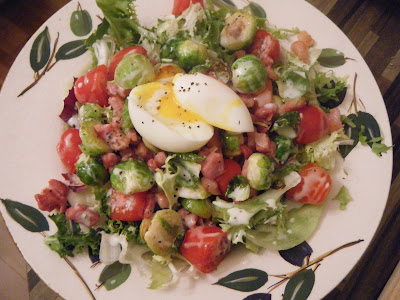
That salad up there was amazing, it reminded me of the sort of warm salads in you get in Parisian brasseries, that are a complete meal in themselves. I used some prepared, crunchy salad leaves, and made a dressing out of olive oil, lemon juice, mayo and salt and pepper. I fried the brussels and lardons for about 10 minutes until they were nice and brown and slightly crispy, chopped some lovely tomatoes into the salad and cooked an egg for 3 minutes, so that it was soft boiled. Finished it off with more black pepper, et voila!

And finally the good ol' English classic - bubble and squeak, served with baked beans and a fried egg on top. I made that for my Polish cousin today, who lives in Greece and hasn't have the chance to sample such delights before. She actually loved it. Well, who wouldn't... so I fried a red onion and the brussels until crispy and made the mash with maris piper potatoes, butter, a little bit of milk, and sea salt. I also used a spring of rosemary from my garden and a little bit of turmeric to add some more flavour to the veg. For anyone reading that does not live in the UK, you combine the veg with the mashed potatoes. Traditionally, bubble and squeak is made with cabbage - but really you can use anything you want that you have leftover - and is the perfect comfort food
Monday, 8 November 2010
Roast pumpkin quinoa
Perhaps I am a little obsessed with pumpkins right now

But the season only comes round once a year, right? That's not a rhetorical question - I have no idea if what I'm saying is actually true, but i assume that's the case, because it seems to be the only time of year that I eat them. I made this recipe up on my neverending journey home from work today. I don't want to moan, but I don't know what's happened with the transport system recently, it's a bit depressing, especially in gale force winds like we had today in this "green and pleasant land". I shouldn't be sarcastic though, as I do love England. It is very green. And mostly pleasant, if a little unpredictable. So, as usual, I missed my dance/yoga class, and decided to come home and cook something delicious, and healthy, to cheer myself up - I wanted to I'd try and do something a bit different with the quinoa I had in my cupboard

Ingredients (serves 4)
250g Quinoa
1 small pumpkin
Tin of chickpeas
Handful mint
60 g cashew nuts
Handful black olives
2 garlic cloves
1 large chilli
Handful sundried tomatoes
Half a lemon
Walnut oil
Salt and pepper to taste
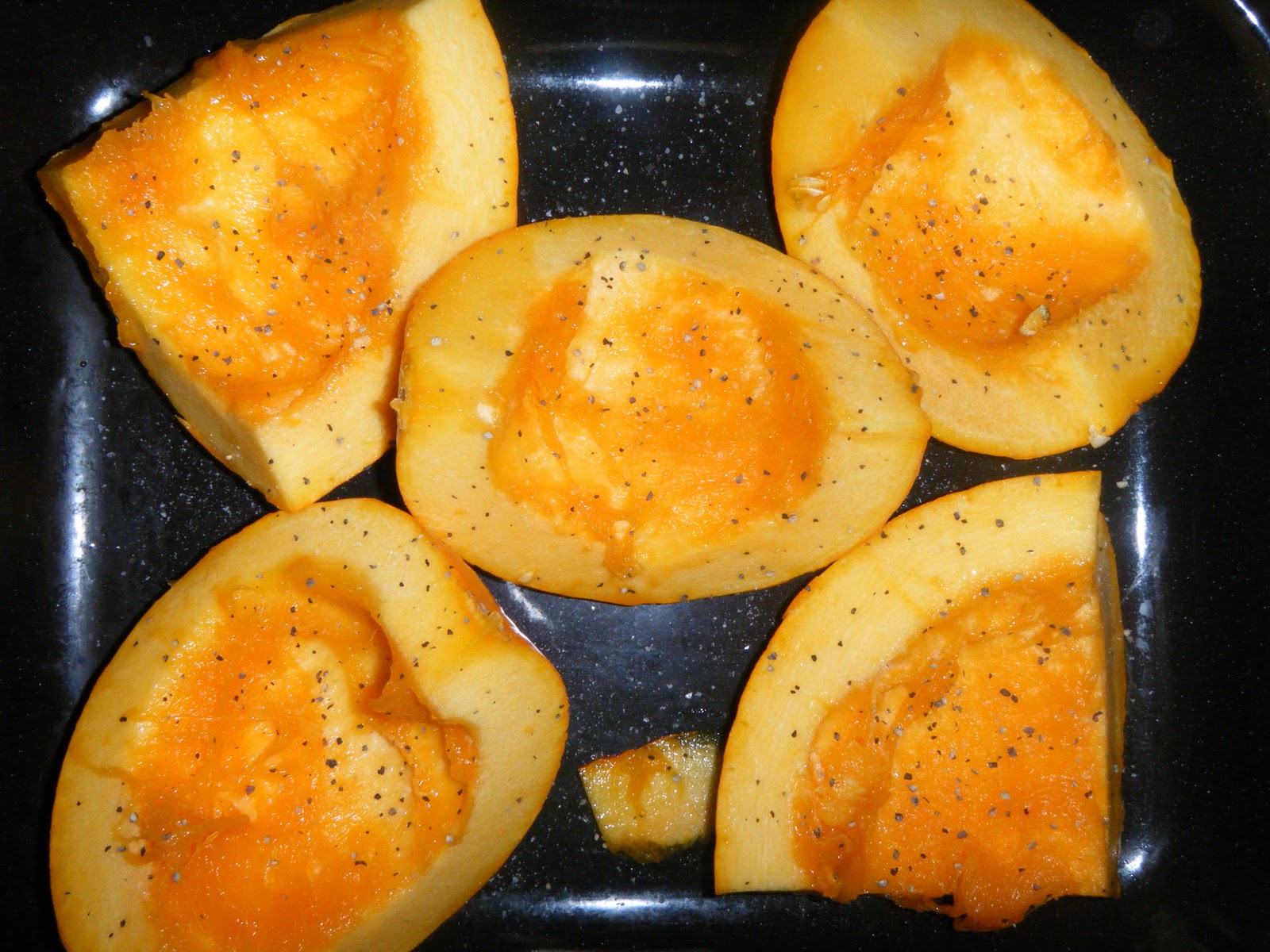
So I scooped the seeds out of the pumpkin and roasted it on a very high heat (about 220 degrees C) for about half an hour. I cooked the quinoa according to packed instructions (more or less), which took 20min. In that time, I prepared the "pesto", which I guess isn't really pesto at all, since it has no basil or pine nuts in it... I dry roasted the cashew nuts, chopped the mint, garlic and chilli, then blended it all together with lemon juice, walnut oil and some salt and pepper in my precious pestle and mortar.A blender would work just as well I'm sure, I just love my thai pestle and mortar so much that I would rather do it the slow way. It's kinda therapeutic

Of course I made a massive quinoa mess along the way...

Once the quinoa was ready, I added the "pesto", the chopped sundried tomatoes, olives and chickpeas, and let it all steam, with the heat turned off. I peeled the pumpkin, chopped it up and added that in too. You may want to peel it beforehand, especially if you have sensitive hands. My hands seem to be made from asbestos, and I find it much easier to peel once it's soft, so I do it this way. Finally, crumble the goat's cheese in. Stir everything while heating gently for a couple of minutes, before adding more black pepper, perhaps another squeeze of lemon, and serving

I thought that all the ingredients really worked together, yet I hope you feel free to mess around with the quantities and substitute stuff if you want to. Since this recipe was literally born a few hours ago, on the bus, I can hardly be too precious about it. But you should definitely give it a go - I'm sure you know already how ridiculously good quinoa is for you. I feel that I need to go on a bit of a health kick right now (especially after the Saturday night I had), so this is the perfect start. I also put the seeds on a separate tray and stuck them in the cooling oven once I'd taken the pumpkin out. Tomorrow, I'll add sea salt and have them as a beer snack
Sunday, 24 October 2010
Pumpkin soup
It's that time of the year again...

The nights are closing in and there's a nip in the air, who wouldn't want some pumpkin soup? This is one I made last week for myself and my uncle Kazik who is staying with me right now, doing my floors and finishing off all the stuff that the builders have given up on. Soup is always better, in my experience, when you take your time with it. Therefore, I cooked it one night, left it to cool, then blended it the next morning, adding the cream. We then warmed it up and ate it for dinner for two nights running, the second night with penne pasta, which worked really well, and made it into a more complete meal
Ingredients
1 small pumpkin, cut into chunks, with seeds taken out
1 leek, chopped
1 carrot, chopped
1 parsnip, chopped
1 green chilli
Chicken or vegetable stock
1 tblsp butter
1 tblsp olive oil
1 small single cream
Salt and pepper
Roast the pumpkin in olive oil, with salt and pepper, at about 180 degrees C for about an hour. In the meantime, fry the leek, chilli, carrot and parsnip in the butter. Once they are translucent, add the stock (or water if you prefer) and bring to the boil, then turn the heat down and simmer. Once the pumpkin is ready, peel it and add the bits to the soup, then carry on cooking for another half an hour or so, seasoning at the end. At this point, I turned the heat off and left the soup to infuse overnight, before blending and adding the cream. There's a Polish saying about relationships, which translates as "I don't like my soup reheated". It means that you shouldn't go back to old relationships and try to "reheat" them. I find it so strange, because soup is definitely better reheated, everyone knows that. Conclusion: sayings that don't make any sense are annoying
Subscribe to:
Posts (Atom)